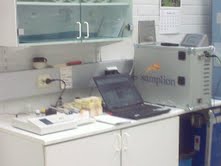
Showing posts with label PMEU. Show all posts

Friday, November 4, 2011

New Microbiological Methods for P&P Industry


It seems that new methods for P&P microbiology are needed.

After discussions in PulPaper Congress in Helsinki, June 2010, it is obvious that traditional colony count methods cannot tell the truth about process problems.

These methods, originally developed for clinical microbiology, seem to have too high nutrient content. They cannot, therefore, select the "troublemakers" from the process samples. Bacteria like Gram-negative rods and Bacillus sp. are overestimated in these analyses but eg. filamentous bacteria cannot grow on common, commercial agar media.

Identification of bacteria can be important in some cases. Food poisoning species from the genuses Bacillus, Staphylococcus and Clostridia and hygiene indicators like coliforms, E.coli and Enterococci should be found in raw material control in the production of high hygiene products (LPB, other food-grade cartonboards and papers as well as tissue-type products). If not covered by other bacteria, they can be found with CC analyses. PCR also gives a good way to distinct them among other bacteria.

These methods cannot reveal some severe problems, however. Biofilm formation and comparative biocide testing are two types of investigations which cannot be performed with agar cultivations or molecular biology methods. They should be done either in machine trials or simulations. PMEU methods seem to be the best alternatives for rapid evaluation of biofilm formation and biocide testing today because they exclude all artefacts, caused by artificial growth medium (in colony counts) or too high selection of microorganisms (in PCR). CC's and PCR can be adopted to certain tests but when the subject of the study is to see, what happens in the real paper processes, simulation methods like PMEU shall be chosen.

Friday, July 24, 2009

The need of bacterial identifications in the paper industry?

IM has discussed about alternative methods for the detection of hazardous or harmful bacteria with Dr. Elias Hakalehto.

It is most important to know the pathogens which will appear in patient samples. Clinical microbiologists shall know who are the enemies of the ill people: their metabolic capabilities, antibiotic resistence patterns etc. Their overall features are easy to find from literature or internet whenever the name of the species is known. This identification can be performed by selective cultivations on agar plates or in PMEU incubator, and further tests like microscopic examinations, API ID systems, immunological tests and/or PCR can be done to confirm the basic identification.

Paper mill is definitely another challenge for microbiologist. In some (relatively rare cases) the names of microorganisms are important to know: if the product shall have high hygiene quality (like LPB and other food-grade cartonboards) or questions about bioterrorism have been arisen (spore-forming Bacillus anthracis as an example). The occurrence of Legionella pneumophila is also a risk in the waste water treatment of paper industry today. Selective cultivations, either on plates or in PMEU, are the solid solutions for continuous microbiological control in those cases. PMEU is preferred because its speed (hours, compared to days with colony count analyses).

Papermakers shall focus more on the metabolic activities than the names of bacteria which they are living with in paper mills, however. Continuous inoculation of the paper production processes by contaminants, delivered with incoming lots of starches, mineral fillers, raw water, dry pulp etc. shall be controlled to avoid spoilage (amylolytic activity as an example), biofilm and slime growth, tastes and odours, spots and colours in the product etc. Because the wide range of bacterial species and their origin from the nature itself, clinical methods do not suit very well for this monitoring. There is no time to start labourous cultivations, pure cultures and identifications when the bacterial input continues day and night, "7/24". PMEU seems to be an excellent tool to check the basic features of process populations, their biocide resistence patterns included.

One important fact must also be taken into account. There are a lot of harmful microbes which actually cannot be cultivated on agar at all. One example are certain filamentous bacteria which may cause biofilm layers into the processes. They can be cultivated in some broths, however, but the usage of the original samples as the growth medium is the best way to detect them all. This can be done with ordinary mb laboratory equipment or with PMEU incubator.

Identification of bacterial species is still needed when the mapping of contamination routes into the processes is the subject of the study. IM will discuss about the microbiological mapping in his next posts (please see http://industrymicrobiologist.blogspot.com/).

Monday, June 8, 2009

Testing E71 photo delivery from ChemBio 09

I'm testing the delivery of pics to this blog. The picture comes from a brochure I grasped during my visit to BioChem in Helsinki May29, 2009. I'd been invited by Industrial Microbiologist. Below is his blog from the event.

IM wrote, "There was a certain drop in the number of visitors, speakers and companies with exhibition desks in the annual Congress "BioChem" in Helsinki, 27.-29.5.2009. It was a pity to see that a lot of paper industry-associated companies did not arrive to show their products. The depression of global economy was very easy to sense. After all: there were still active participants left, eg. the novel company SAMPLION Ltd. which is now distributing PMEU system for all areas of microbiological control."

Sunday, June 7, 2009

Latest post by "Industrial Microbiologist"

After a most busy period in May 2009, IM would like to write something (partly because his insomnia - a common symptom during light & bright Nordic summer nights) to the readers of his blog.

Several seminars for the rise of Nordic forest industry have arranged and will be arranged before Finland "will be closed" for summer holidays. - This is, by the way, a common feature of Finnish lifestyle, and easy to understand: you shall first work in dark and rain for months, the temperature drops well below 0 oC, and you should try to be active all through the winter. But when the summer comes, everybody will wake up again and "see a light at the end of a tunnel" (which was the title in the annual meeting of Finnish Paper Engineer's Association). And then, during the summer months, citizen tend to move to their summer cottages and villas to just rest and collect forces to tolerate the next winter..

Back to the topic:

There was a certain drop in the number of visitors, speakers and companies with exhibition desks in the annual Congress "BioChem" in Helsinki, 27.-29.5.2009. It was a pity to see that a lot of paper industry-associated companies did not arrive to show their products. The depression of global economy was very easy to sense. After all: there were still active participants left, eg. the novel company SAMPLION Ltd. which is now distributing PMEU system for all areas of microbiological control.

Positive attitudes were obvious also in the annual "Summer Summit" by AEL, the major education company for adult professionals, paper industry ones included.

What will happen next? A conference, discussing of future forecasts of forest industry, will be held in the middle of June in Jyväskylä, Finland. After that the annual PIRA congress will be held in Barcelona, Spain, in October.

If only the paper industry research will be activated again..It is, of course, a question of money, but, after all: to leave brilliant Finnish researchers without work is really a vast of excellence. It has be proven several times that the rebuilding of research groups after a depression is a much harder work than to start those activities from zero. It would therefore be better to keep such organisations in work over the bad periods.

IM is looking forward to the next Autumn! A most interesting thing to see what are the forecasts of Nordic P&P industry when the summer is over!

Wednesday, August 20, 2008

How to evaluate paper industry biocides?

The following post was sent to "industrymicrobiologist.blogspot.com" but I think that it may interest also the readers of BIOTOUCH blog (and comments, of course, are more than welcome!).

Before referring the originat text, I would like to add some ideas about evaluation of biocides.

As known by microbiologists, traditional plate count methods cause bias into the biocide test results. No matter the active compounds are added to the process samples for KILL tests, final results are still derived by colony count analyses.

To have faster and more reliable evaluation (no need to dose every alternative into the process for days..weeks) a novel test method, which performes the biocide evaluation in original samples all over the test, is needed. PMEU method seems, until now, definitely to be the best choose.

And then the original post:

What should an ideal biocide be like?

* effective against a variety of microbial species
* effective in different process environments (temperature, pH, RO potential, solid concentrations etc.)
* both fast and conserving type of action
* not harmful for employers of paper machine
* not harmful for paper machine
* not harmful for products of the paper machine
* not harmful for environment
* (something else?)

As far as I know, no such ideal biocide has been developed yet. "Tailored" biocide products shall therefore be combined to fight against raw material contamination, microbial activity in large process water and pulp systems, fiofilm producers...

The rapid development of fast-acting oxidative agents (chlorine-and bromine-based compounds, PAA, ClO2 and even O3) is very promising, but they have limited success as storing agents. Their broad-spectrum influence on even bacterial spores should be taken into account when planning biocide programs, which also should contain compounds to prevent biodegradation during storage periods and formation of biofilms on wet surfaces of the machine.

In some cases, activity of alternative biocides against certain hazardous bacteria are also worth to evaluate.

Thursday, August 7, 2008

Biotouch and the price of oil

Macarena, Elias, Juha, and Bitouch readers, we're now heading towards the second phase with this open innovation platform for Biotouch. Macarena did a great work to get Biotouch started and attracted readers from all over the world. She used some new tools like Yahoo Answers to get more visitors to this blog.

Now I try to attract more readers, commentators, and co-writers. We need to get this waggon moving. A lot of work has been done for years. I hope this will lead to something we couldn't imagine before. Taking this business process to the open is a new and bold move. The social media provides new windows of opportunities for complex issues like Biotech.

We're still struggling with how to turn great innovations like PMEU and the knowledge within the team to Biotouch projects with a solid Financing but time will tell if we're heading in the right direction.

The price of oil is now high, even though it has declined a little from $150 peak prices. But there is still a long way to go before we're down at $50 per barrel. As an evidence, take a look at Elias' email comment and we can see that one of the resasons for the high price of oil is the lack of investments in refinery capacity. Take a look at this quote "There will be no new refineries by Giuseppe Marconi - 2008/07/23" below.

Giuseppe Marconi's comment is two weeks old. Here is Elias' comment.

Hello!

Thank you for the message. I have adjoined here one comment related to the inadequasy of crude oil preventing the planning of new refineries. I think that this is rather indicative also pricewise.

I would be glad to contribute on "Biotouch" especially since I was generating the concept in the spring in some of our fruitful telephone conversations. It is essentially a way to act in a new direction in order to gain understanding on the microbes.

Tried to call Hannu today, after his message. We will be in touch hopefully on tomorrow.

With best regards,

Elias

There will be no new refineries by Giuseppe Marconi - 2008/07/23

Oil companies won't be building more refineries, because there won't be enough oil left to refine by the time new refineries could pay for themselves.

There hasn't been a new refinery built in the US since 1976. In 1982, there were 301 operable refineries in the U.S and they produced about 17.9 million barrels of oil per day. Today there are only 149 refineries, and they're producing 17.4 million barrels. This increase in efficiency is impressive but not a miracle. As with everything these outputs are carefully calculated to optimize profitability. Let me explain.

Truth be told, new refineries require tremendous financial commitments which take anywhere from 15 to 25 years to amortize. With record oil prices it would make perfect sense to invest in a few refineries today, except... for the lack of oil to be refined 20 years from now.

Trends have predicted that peak oil production, where the production of oil starts to decline, will be reached around 2007-2010. After that, there will be less and less oil to refine no matter where drillers look. In this context, building expensive new refineries does not make a lot of sense as existing ones will be sufficient to process whatever little oil is left. So forget about new refineries, except for a few in the northern midwest to process the heavy oil from Canada.
refinery tank.

Crude oil is a finite resource more and more depleted. As such, an increasing demand put on this finite supply necessitates careful management in order to stretch its lifespan and profitability.

2008/8/5 Helge V. Keitel


Friday, August 1, 2008

PMEU Incubator as a tool for fast evaluation of slimicides.

Time series of steel coupons are the common method to evaluate the effects of biocides against slime-forming bacteria in paper machine processes.

The installation of coupons inside the machine may not be the main problem. Two other aspects will limit the value of this method:

* only one slimicide (= the current slimicide used in the machine) can be tested
* duration of the evaluation may take days...weeks

PMEU Incubator (by FINNOFLAG Oy) has been adopted into biocide and slimicide testing because it gives chance to

* evaluate several biocides/slimicides
* only hours to days are needed to have the results of evaluations

Picture (above) shows a bacterial population, attached on the surface of a PMEU test coupon, with fibres, minerals and starches. These bacteria stand washing of coupon with water after testing which means that they are "primary attachers" on the surface of steel when immersed in process water of a paper machine.

More about this issue: http://www.industrymicrobiologist.blogspot.com/.


Friday, June 27, 2008

Biotouch PMEU Conference Call Today

We'd an interesting Biotouch Conference Call Today. The participants:
  1. Macarena Pallares
  2. Juha Mentu
  3. Helge Keitel
I'd a separate discussion with Elias Hakalehto after our online meeting. Elias hopes that the traditional paper forestry industry would understand the deeper meaning of "bio" in future biorefineries.

"The present biorefinery technology is based on one hundred years old inventions. We do have the tools and intellectual property for a radical modernization of how we use and monetize future fiber processing. But we need partners with a deeper understanding about the added values that the Biotouch-approach can deliver," Elias said.

We discussed the Biotouch PMEU biotech service concept and its wide range use on a global scale. Juha informed about a recent problem solving case in southern Europe where PMEU proved its value as a problem solving tool.

The other thing is the combination of Luminometry and PMEU in paper / board machine microbial online activity control with PMEU as an added value "disease determination."
  1. Luminometry and ATP as a "thermometer" to indicate what's happening (fever)
  2. PMEU is the tool for in depth determination of the cause of the "sickness"
  3. The Biotouch concept provides a methodology for standardized problem solving
The Porvoo community water supply reported about a problem during our meeting. PMEU would be the tool for fast determination of malicious microbial presence. Let's hope it isn't a new Nokia Water Case.

Macarena told about the the strong food processing industry in Mexico. Another case where the Biotouch approach could be used is in the Mexican world class cement industry.

Financing of a world wide operation to promote Bitouch and PMEU solutions were discussed.

We do have a revolutionary biotechnological solution - comparable with microscopy - for rapid microbe growth determination, but we would need a partner with deeper pockets to support the globalization of Biotouch-operations.

"A company in the USA called QuoNova has started to attack the problem of biofilms as a health problem and they are developing products that allow combating biofilms in wounds and in cystic fibrosis in lungs," writes Macarena in her previous posting.

I'd like to have your comments about this.