Showing posts with label biofilms. Show all posts

Sunday, December 9, 2012

Testing the many faces of bio economics

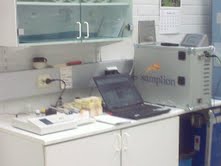
2011-11-21 11.44.25

This frightening picture is reminding me about a blog visualizing microbes and bacteria.

I hope to find those representations soon to have a model.

Nevertheless, we’re going to create our own picture and graphics gallery.

We need to invest time in creating cartoons and images.

There’re tons of pictures describing process technology solutions, but the challenge is to create visual effects to show events that aren’t visible to the eye.

Juha Mentu does have pictures from microscopic “body counts”.

We’ve the artistic freedom to show the mystery of microbial activity with inventive graphical effects.

Friday, November 4, 2011

New Microbiological Methods for P&P Industry


It seems that new methods for P&P microbiology are needed.

After discussions in PulPaper Congress in Helsinki, June 2010, it is obvious that traditional colony count methods cannot tell the truth about process problems.

These methods, originally developed for clinical microbiology, seem to have too high nutrient content. They cannot, therefore, select the "troublemakers" from the process samples. Bacteria like Gram-negative rods and Bacillus sp. are overestimated in these analyses but eg. filamentous bacteria cannot grow on common, commercial agar media.

Identification of bacteria can be important in some cases. Food poisoning species from the genuses Bacillus, Staphylococcus and Clostridia and hygiene indicators like coliforms, E.coli and Enterococci should be found in raw material control in the production of high hygiene products (LPB, other food-grade cartonboards and papers as well as tissue-type products). If not covered by other bacteria, they can be found with CC analyses. PCR also gives a good way to distinct them among other bacteria.

These methods cannot reveal some severe problems, however. Biofilm formation and comparative biocide testing are two types of investigations which cannot be performed with agar cultivations or molecular biology methods. They should be done either in machine trials or simulations. PMEU methods seem to be the best alternatives for rapid evaluation of biofilm formation and biocide testing today because they exclude all artefacts, caused by artificial growth medium (in colony counts) or too high selection of microorganisms (in PCR). CC's and PCR can be adopted to certain tests but when the subject of the study is to see, what happens in the real paper processes, simulation methods like PMEU shall be chosen.

Friday, July 24, 2009

The need of bacterial identifications in the paper industry?

IM has discussed about alternative methods for the detection of hazardous or harmful bacteria with Dr. Elias Hakalehto.

It is most important to know the pathogens which will appear in patient samples. Clinical microbiologists shall know who are the enemies of the ill people: their metabolic capabilities, antibiotic resistence patterns etc. Their overall features are easy to find from literature or internet whenever the name of the species is known. This identification can be performed by selective cultivations on agar plates or in PMEU incubator, and further tests like microscopic examinations, API ID systems, immunological tests and/or PCR can be done to confirm the basic identification.

Paper mill is definitely another challenge for microbiologist. In some (relatively rare cases) the names of microorganisms are important to know: if the product shall have high hygiene quality (like LPB and other food-grade cartonboards) or questions about bioterrorism have been arisen (spore-forming Bacillus anthracis as an example). The occurrence of Legionella pneumophila is also a risk in the waste water treatment of paper industry today. Selective cultivations, either on plates or in PMEU, are the solid solutions for continuous microbiological control in those cases. PMEU is preferred because its speed (hours, compared to days with colony count analyses).

Papermakers shall focus more on the metabolic activities than the names of bacteria which they are living with in paper mills, however. Continuous inoculation of the paper production processes by contaminants, delivered with incoming lots of starches, mineral fillers, raw water, dry pulp etc. shall be controlled to avoid spoilage (amylolytic activity as an example), biofilm and slime growth, tastes and odours, spots and colours in the product etc. Because the wide range of bacterial species and their origin from the nature itself, clinical methods do not suit very well for this monitoring. There is no time to start labourous cultivations, pure cultures and identifications when the bacterial input continues day and night, "7/24". PMEU seems to be an excellent tool to check the basic features of process populations, their biocide resistence patterns included.

One important fact must also be taken into account. There are a lot of harmful microbes which actually cannot be cultivated on agar at all. One example are certain filamentous bacteria which may cause biofilm layers into the processes. They can be cultivated in some broths, however, but the usage of the original samples as the growth medium is the best way to detect them all. This can be done with ordinary mb laboratory equipment or with PMEU incubator.

Identification of bacterial species is still needed when the mapping of contamination routes into the processes is the subject of the study. IM will discuss about the microbiological mapping in his next posts (please see http://industrymicrobiologist.blogspot.com/).

Wednesday, January 28, 2009

The need of paper industry biocides: alternative prospects.

IM is wondering: are there any other sector of process industry, where microbes are allowed to grow like in paper industry?

Biotechnological processes, of course. But their populations are carefully selected and controlled. And they are employers of the company, not criminals trying to cause harm to the company.

Some significant changes in paper industry processes have taken place after the rise of active environmental care. Both the closure of water circulation and the cancelling of biocides having mercury as an active incredient are favorable for the environment, of course. But the microbial growth inside the paper machines has activated at the same time.

The beginning of neutral paper production led to an "ecocatastrophe" inside paper machines. The rise of pH value (as well as the rise of temperature, caused by the extended recirculation of water) was fatal for slow, acid-loving fungal growth. New mineral additives are an important source of certain types of bacteria, causing severe problems like production of slime, spoiling of the process compounds and hygiene faults of the products.

IM has published an article "Paper Machine: an Ecosystem and a Bioreactor" (INOCULA 1/2007. Helsinki, Finland). Many readers agree: paper machines offer ecological niches for bacteria, and the controlled environments of wet end circulations are very much similar with those of biotechnical processes, based on chemostatic fermentors.

A lot could be do to make paper machines more unfavorable growth environment for microbial contaminants. Very good results have been achieved in some projects where ecological aspects have been taken into account. These issues will be discussed later in this blog.

But the main question is: how much biocides we still need to control the microbial growth in all regions of a paper machine?

Incoming raw materials, sorry to say, may be very contaminated: the highest value of total count during IM's career has been over 100 000 000 cfu/g in a mineral slurry (which was fortunately replaced by a fresh lot by the supplier!). It is therefore obvious that a continuous control - both analytical and practical - is needed for starches, mineral pigments and other contaminated raw materials. This does not mean that all lots are spoiled: there are suppliers which know their response to deliver pure products to the mills but all kind of errors in biocidic pre-treatment, transport and storage of these products may happen.

Certain sites of paper machines also need biocidic treatments all the time. Chosing proper solutions for biocide programs (type of biocide, active compound, dosing sites, timing etc.) of a paper machine is a challenging tasks. In best cases, both the paper mill and biocide personnel are sitting down and discussing of the individual problems of the paper process hygiene.

When specified laboratory services, having tools like PMEU and biofilm microscopy, are included, the final result can be optimal one. Paper industry microbiologists can also help significantly by declaring the effects of process parameters on the growth of planktonic and biofilm bacteria.

The more competence is included, the better solution will be find.

Friday, August 1, 2008

PMEU Incubator as a tool for fast evaluation of slimicides.

Time series of steel coupons are the common method to evaluate the effects of biocides against slime-forming bacteria in paper machine processes.

The installation of coupons inside the machine may not be the main problem. Two other aspects will limit the value of this method:

* only one slimicide (= the current slimicide used in the machine) can be tested
* duration of the evaluation may take days...weeks

PMEU Incubator (by FINNOFLAG Oy) has been adopted into biocide and slimicide testing because it gives chance to

* evaluate several biocides/slimicides
* only hours to days are needed to have the results of evaluations

Picture (above) shows a bacterial population, attached on the surface of a PMEU test coupon, with fibres, minerals and starches. These bacteria stand washing of coupon with water after testing which means that they are "primary attachers" on the surface of steel when immersed in process water of a paper machine.

More about this issue: http://www.industrymicrobiologist.blogspot.com/.


Wednesday, June 25, 2008

Biofilms

A biofilm is a structured community of microorganisms encapsulated within a self-developed polymeric matrix and adherent to a living or inert surface. Biofilms have a large and varied role in human activities from being responsible for a number of diseases in humans and animals to also being invaluable in the treatment of domestic sewage and industrial wastes. (Cambridge Journals) The study of biofilms represents a radical new way of understanding the microbiology of virtually everything around us, from problems that afflict industry to serious public health issues. (Montana State University).

oajsopjqowhndklsjfnhweifjekwjfsjloq Image by http://i.treehugger.com/files/th_images/biofilm.jpg


So the basic questions to ask are: When do biofilms cause problems to humanity? And when are biofilms helpful?

The propensity of biofilms to attach can cause many problems for a wide range of industries. An example of these problems is the contamination that biofilms cause in the pulp and paper manufacturing, and the water and treatment distribution. Biofilms are responsible for billions of dollars in lost industrial productivity, as well as product and capital equipment damage each year. That is why some companies have already started programs of R&D in this area. An example of one of these companies is Finnoflag OY which is developing a product called PMEU that allows the detection of microbes in the wood processing and food industries.
kSHOWHDILKNFEKNEFKN mkw Image by http://www.siblarch.net/images/Storbranna3%202006.JPG
Biofilms can also cause many infections in human beings, and can be really dangerous. Biofilm infections form preferentially on foreign surfaces as well as dead or damaged tissue. These infections develop gradually and may be slow to produce overt symptoms. Once established, however, biofilm infections persist. They are rarely resolved by host defense mechanisms, even in individuals with healthy innate and adaptive immune reactions. (Montana State University). A company in the USA called QuoNova has started to attack the problem of biofilms as a health problem and they are developing products that allow combating biofilms in wounds and in cystic fibrosis in lungs.

Although biofilms sound really harmful, they also have some benefits. For example: they may be used for the self-purification of streams and rivers, in the treatment of waste and pollution and/or the generation of electricity. This is made possible by the protective slimy matrix that prevents attack from the immune system and antibiotics, as well as toxic contaminants while breaking down waste or effluent. (European Research Comission).

It is really good that some companies have already started the R&D of products to combat biofilms, or to enhance their beneficial properties but much more investment should still be done in this area.